
History of Pedro St. James
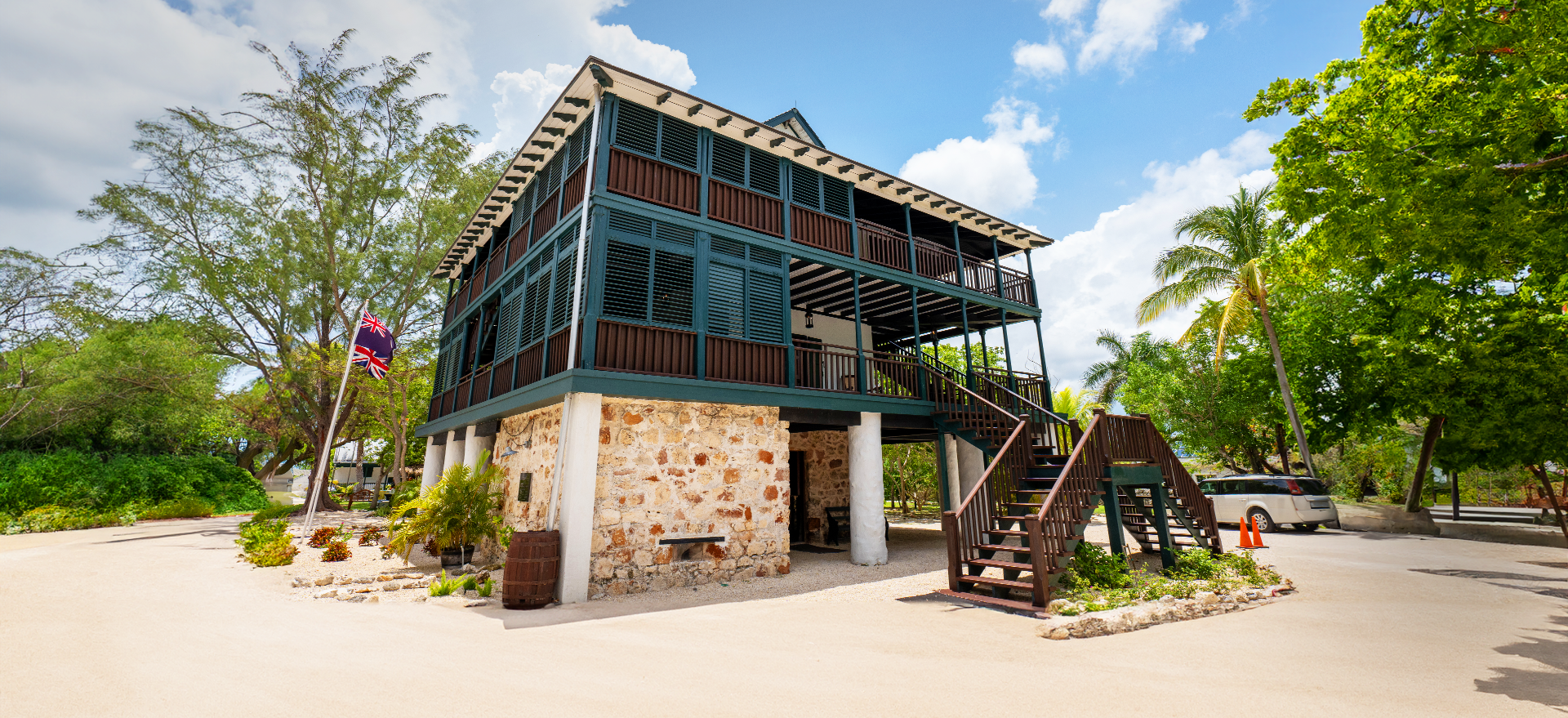
In the late 18th century, the population of the Cayman Islands was approximately 500 people and Grand Cayman was little more than an undeveloped fishing village. With the use of slave labour, it was an Englishman named William Eden who built the expansive Great House and farmed the adjoining land as a plantation.
Since its construction more than two centuries ago, Pedro St. James has been put to a variety of uses, including a courthouse, jail, Government Assembly and restaurant. Surviving hurricanes, fires, vandalism, and rumours of being jinxed, it stands today, in its restored state, as a dynamic piece of Caymanian heritage.
Perhaps best known as the “Birthplace of Democracy in the Cayman Islands”, Pedro St. James was the venue for a meeting on 5 December 1831 where the decision was made to form the first elected parliament. Later, on 3 May 1835, Robert Thompson, sent from the Governor of Jamaica, held court at Pedro St. James to issue the proclamation ending slavery in the British Empire.
Over the ensuing years, the building has been buffeted by hurricanes, struck by lightening, and engulfed by fire. The “Castle” was abandoned by the Eden family in 1877 after lightening struck the main building killing the daughter of the house, Mary Jane. Unused, it ultimately fell into decay, and by 1910 it was reported that only the original stone walls remained. The building was renovated by the Hurlston family in 1914, but was then abandoned again in 1920.
In 1959, a portion of the property was purchased by Thomas Hubbell who renovated the “Castle” and lived there until 1963. It was operated as a restaurant and hotel from 1967 until it fell victim to a severe fire in 1970. It was repaired and again operated as a restaurant from 1974 until the late 1980s when it was damaged by a hurricane and another fire. In 1989, the restaurant operation went bankrupt and the “Castle” again sat vacant.
Finally, in 1991, the property was purchased by the Cayman Islands Government for development as an historic site, and the Canadian firm of Commonwealth Historic Resource Management Limited was retained to develop a restoration and interpretation plan for the site. That work concluded in 1996 at a cost of approximately $8 million and produce the historic site that exists today.
1780s
1780s – Pedro’s construction begins; William Eden builds the Great House for family and community gatherings on Grand Cayman’s southern coast.
1823
Pedro becomes a central gathering hub, hosting leaders’ meetings on crucial community matters in the Caymans.
1831
Pedro sees Cayman’s first elected legislature established, marketing a democratic milestone for the islands.
1835
British Emancipation Act proclaimed from Pedro, freeing enslaved individuals and advancing Caymanian social history.
1877
Hurricane damages Pedro, leading to repairs, but it subsequently falls into disrepair over time.
1910
Various families reside at Pedro, but lack of maintenance accelerates its decline and isolation.
1920
Fire damages Pedro’s interior, worsening its dilapidation and making parts unusable.
1960
Owner Thomas Hubbell remodels Pedro, calling it a haunted castle and claiming pirate ties.
1970s-1980s
Restoration efforts begin, valuing Pedro’s historical, architectural, and cultural significance.
1989
Another fire renews government and preservation advocates’ determination to restore Pedro.
1991
Government launches restoration to replicate Pedro’s original 18th-century design and integrity.
1996
Pedro reopens as a restored historic site and museum, offering insight into Cayman’s heritage.
1999
Pedro hosts the first National Heroes Day, becoming a venue for national celebrations.
2003
Pedro commemorates the 168th Emancipation anniversary, emphasizing its historical role.
2011
Constitution Day at Pedro marks 50 years since Cayman’s first constitution, with reenactments.
2020s- Present
Pedro hosts Heroes Day, Constitution Day, and cultural events, strengthening its heritage legacy.