
Artefacts in the Dining Room
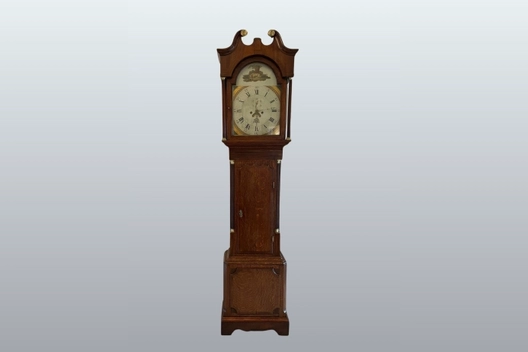
18th Century Longcase Clock
This elegant 18th-century longcase clock also known as a grandfather clock, features a polished mahogany case, intricate carvings, and a gracefully arched bonnet. The brass dial includes Roman numerals and a moon phase indicator. The central section has a glass door revealing the weights and pendulum.
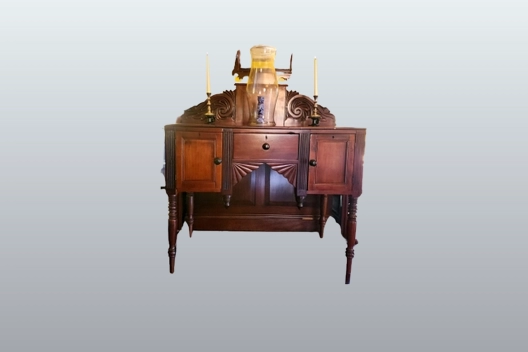
18th Century Mahogany Sideboard
This elegant 18th-century mahogany sideboard features a polished finish, intricate carvings, a rectangular top, two spacious drawers with brass handles, and two cabinet doors for ample storage. It stands on tapered legs, exemplifying the craftsmanship and timeless beauty of 18th-century furniture, making it a stunning addition to any classic interior.
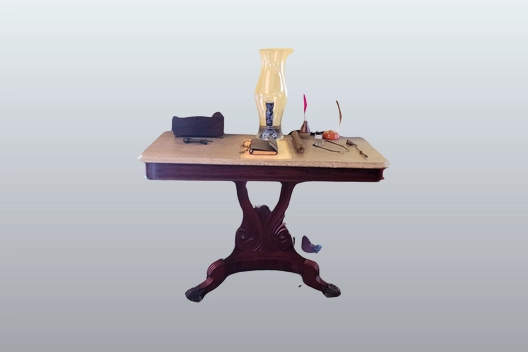
18th Century Writing Desk With Marble Top
This desk from the late 18th century features a high- quality mahogany base with a beautifully polished marble top. The combination of wood and marble exemplifies the luxurious yet functional design typical of this period. Brass hardware and intricate carvings further enhance its aesthetic appeal, making it a statement piece in any classic interior.
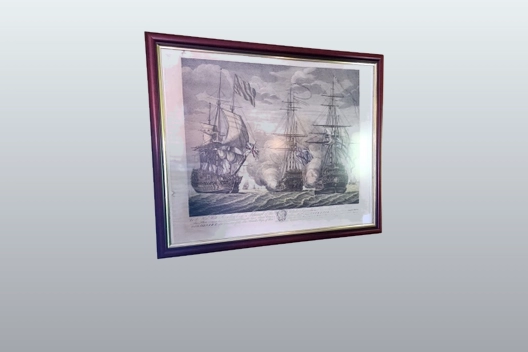
18th Century Three-deck Warships Photograph
HMS Intrepid, launched in 1770, was a 64-gun third-rate ship of the line, notable for its participation in the Battle of the Chesapeake in 1781. The French ship Sérieux was captured by the British in 1747 and renamed HMS Intrepid. Gloire, launched in 1859, was the first ocean - going ironclad warship, marking a significant advancement in naval technology from wooden to iron - armored ships.
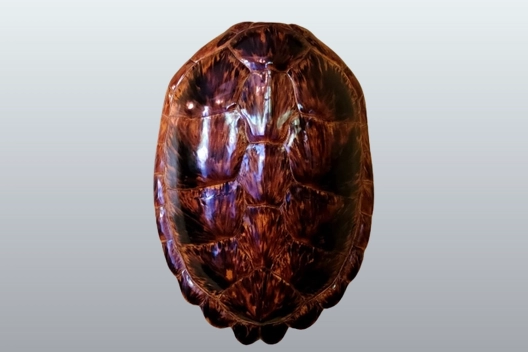
Hawsbill Sea Turtle Shell
The hawksbill sea turtle found in the Cayman Islands features a distinctive, heart-shaped carapace with overlapping amber-colored plates edged in brown and black. The shell's serrated, tactile texture provides both protection and camouflage among the coral reefs.
Artefacts in the Parlour
Hawksbill Sea Turtle Shell
The hawksbill sea turtle found in the Cayman Islands features a distinctive, heart-shaped carapace with overlapping amber-colored plates edged in brown and black. The shell's serrated, tactile texture provides both protection and camouflage among the coral reefs.
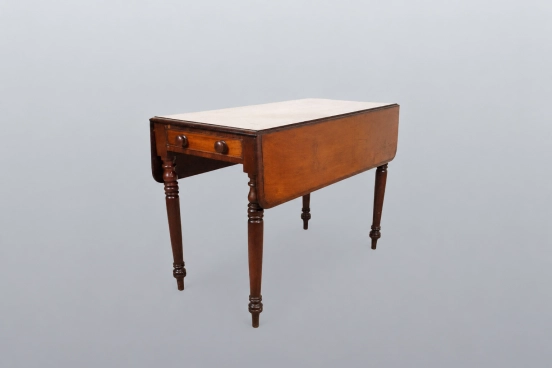
18th Century Pembroke Table
Antique Pembroke Tables are a style of a small antique table first seen in the 17th Century but became more commonly used in the Georgian period. The antique Pembroke Table has small drop leaves on each side that can be opened and supported using small hinged brackets to create a larger table when needed.
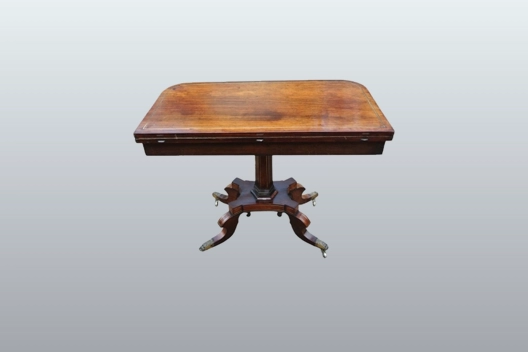
Playing Card Table
A 19th-century mahogany folding card table with green baize lining, swivel top revealing compartment below, on a hexagonal column and quatrefoil base with paw feet.
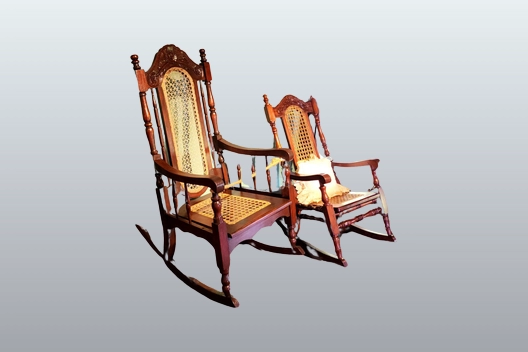
Regency Mahogany Cane Rocking Chair
A 19th century Regency mahogany and cane rocking chair circa 1820, featuring scroll arms, paw feet and handwoven caning.
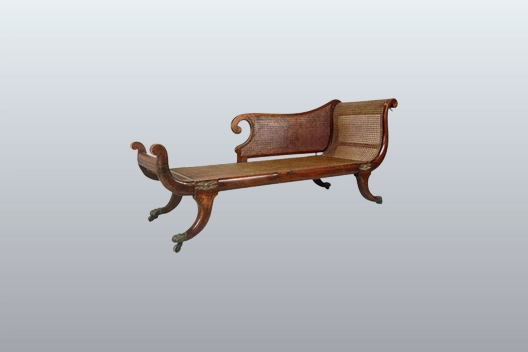
Cane Chaise Lounge Or Daybed
British colonial daybed, crafted in mahogany with a graceful form, floral carvings, handmade construction, caned seat, back and side, and turned legs with brass casters.
Artefacts in the Bedroom
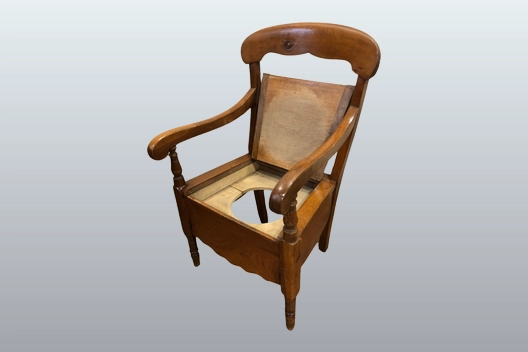
Parturition Chair Or Commode
This 17th-century English parturition chair, made from mahogany, serves dual purposes as a birthing and commode chair. It features a removable keyhole seat, curved design elements, and a concealed ceramic bowl under a hinged seat lid, blending functionality with aesthetics.
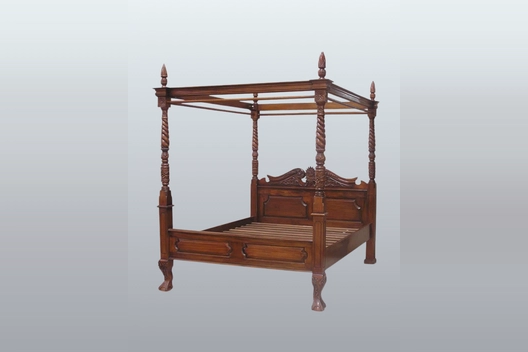
18th Century Georgian Style Mahogany Four Poster Bed
A simple 18th century style mahogany bed without a panelled ceiling.
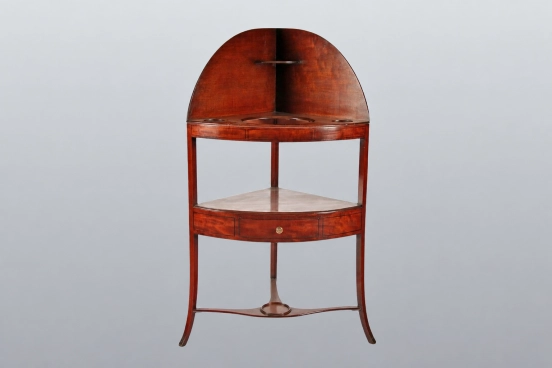
George Iii Mahogany Corner Washstand
The top shelf has three circular cutouts to take a washbowl and two side dishes while the middle shelf is fitted with a bow-fronted drawer. The lower cross stretcher has a circular dish stand. (Circa 1800).
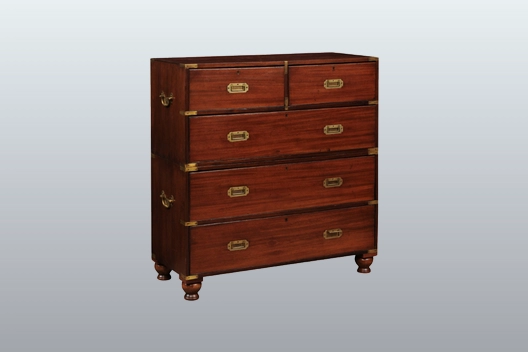
19th Century Military Campaign Chest Of Drawers
Military Campaign Chests are sturdy, portable furniture for high-ranking officers, made of premium mahogany. They have a moulded foreedge, two short drawers over three larger drawers with brass swan neck handles, and elegant moulding below the bottom drawer, all supported by compact bun feet.
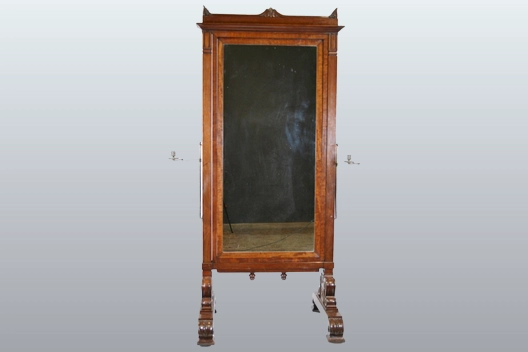
Mahogany Cheval Mirror
This cheval mirror features a finely carved mahogany frame with an original mirror plate, brass candlestick holders on carved supports, and a flamed mahogany base with down-swept feet and castors for mobility.